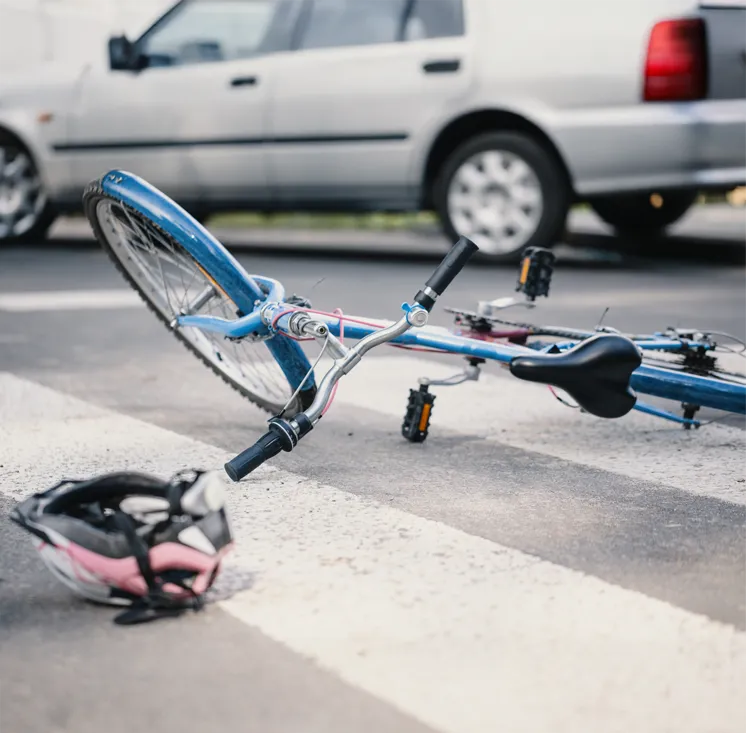
There is no rule requiring you to call a lawyer after a bike crash. There is, however, a schedule on which the evidence disappears, and it does not wait for you to finish recovering.
Why timing decides so much
The proof that establishes fault has a short shelf life. Surveillance and traffic camera footage is routinely overwritten within days. Skid marks and debris are gone after the next rain. Witnesses who gave a name at the scene become hard to reach a month later, and their memory of a five-second event degrades quickly.
Meanwhile the driver’s insurer opened a file the day it was reported and started building their position.
What causes these crashes
- Distracted driving
- Failure to yield the right of way
- Speeding
- Unsafe lane changes
- Dooring
- Poor road conditions
- Defective bicycle components
Signs you should make the call
Your injuries are serious. Anything requiring hospitalization, surgery, or ongoing treatment involves numbers too large to negotiate casually — and future medical costs that are easy to undercount.
Liability is unclear. If the driver disputes what happened, or the report is ambiguous, or nobody saw it, the case turns on evidence that has to be gathered deliberately.
The insurer denied your claim. A denial is a position, not a verdict. It frequently gets revisited once someone challenges the basis for it.
You received a settlement offer. Especially an early one. A fast offer usually means the insurer has calculated that the claim is worth more than they are offering, and would like to close it before anyone works that out.
A rough timeline
Within days, get medical treatment and make sure the crash is reported. Within the first week or two, evidence preservation matters most — this is when footage still exists and witnesses are still reachable. Before giving any recorded statement, get advice. Before accepting any offer, get the claim valued properly.
What waiting costs
Evidence disappears. Footage overwrites, scenes get cleared, physical damage gets repaired.
Witnesses become unreachable. People move, change numbers, and forget details.
Deadlines pass. Illinois generally allows two years from the date of the crash for a personal injury claim. Claims involving a government entity — a badly maintained road, for instance — carry far shorter notice requirements, sometimes measured in months. Miss one and the merits stop mattering.
Mistakes that cost people money
Not getting checked out. Adrenaline hides injuries, and a gap between the crash and treatment is the first thing an insurer points to when arguing your injuries came from something else.
Giving a detailed statement too early. Before you know the extent of your injuries, anything you say about being “fine” gets quoted back.
Taking the quick settlement. It closes the claim permanently, including for treatment you have not had yet.
Throwing things away. The damaged helmet, the bent frame, the torn clothing — all of it is evidence. Keep it.
What to preserve
- Photographs of the scene, vehicles, your bicycle, and your injuries
- The police report
- Names and contact details for witnesses
- All medical records and bills
- The damaged bicycle and gear, unrepaired
- Any correspondence from an insurer
What we do with it
We investigate while the evidence exists, deal with the insurance company so you are not giving statements unadvised, and value the claim including the future costs people routinely leave out.
If you were hit while riding in the Chicagoland area, the conversation is free and it is worth having sooner rather than later.